


TNEA CODE 1509
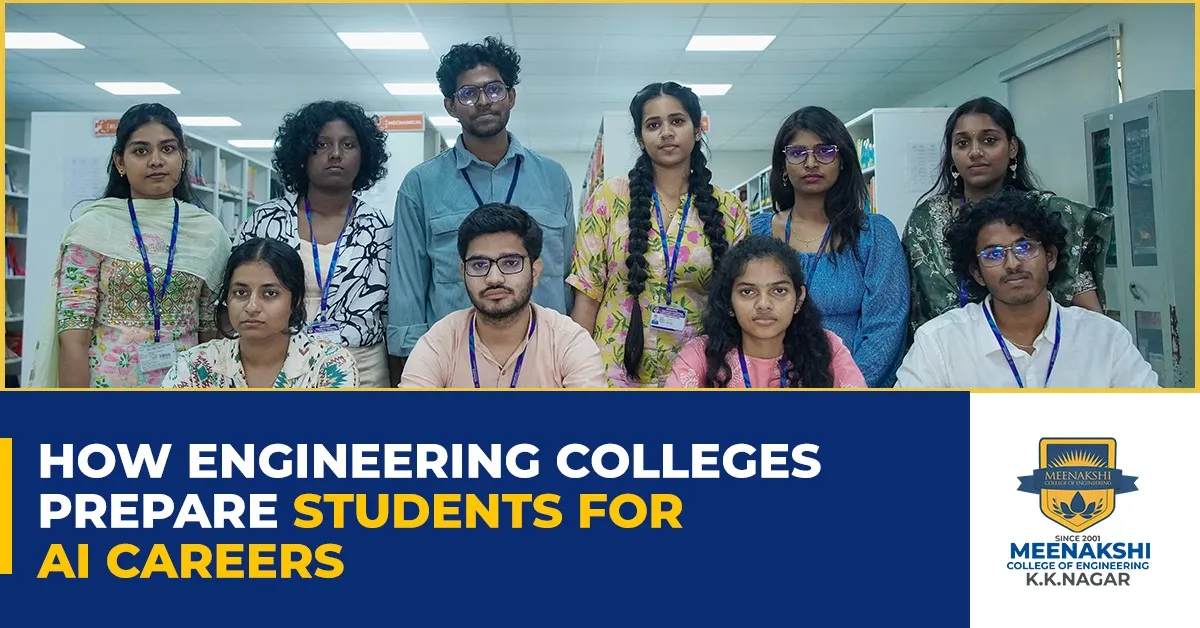
In today’s fast-evolving digital era, Artificial Intelligence (AI) is transforming education, especially in engineering. From solving complex equations to debugging code, AI-powered tools are helping students learn smarter and faster. Among these innovations, ChatGPT has emerged as a powerful assistant for engineering students worldwide.
At Meenakshi College of Engineering (MCE), Chennai, integrating modern technology with academic excellence is essential to preparing students for the future. Let’s explore how AI tools are reshaping engineering education and helping students improve productivity, understanding, and problem-solving skills.
Engineering subjects like Mathematics, Electronics, Mechanical Design, and Programming often involve complex theories and formulas. AI tools like ChatGPT provide:
Instead of waiting for classroom sessions, students can instantly clarify doubts anytime. This improves self-learning ability and strengthens foundational knowledge.
For Computer Science and IT students, coding is a core skill. AI tools assist by:
Whether learning Python, Java, C++, or web development frameworks, students can practice more efficiently. AI acts like a 24/7 coding mentor, enabling faster project completion and improved technical confidence.
AI tools help students:
This significantly reduces study time while improving retention. Students can focus more on understanding rather than spending hours organizing content.
Engineering education is all about solving real-world problems. AI tools encourage analytical thinking by:
By interacting with AI, students develop a deeper understanding of concepts rather than rote memorization.
For final-year projects and research activities, AI tools help in:
Students at institutions like Meenakshi College of Engineering can leverage AI to enhance project quality and innovation, making them industry-ready.
Engineering graduates need strong communication skills. AI tools help students:
This enhances overall personality development and boosts placement readiness.
Modern engineering careers demand familiarity with AI-driven platforms. Learning tools such as:
gives students a competitive edge in campus placements and internships.
Unlike traditional classroom learning, AI provides personalized responses based on individual queries. Students can:
This flexibility helps slow learners catch up and advanced learners explore deeper knowledge areas.
With proper usage, AI tools can:
However, AI should be used as a learning assistant, not a replacement for independent thinking.
While AI tools provide numerous benefits, students must:
AI works best when combined with critical thinking and faculty guidance.
The integration of AI tools like ChatGPT is revolutionizing engineering education. From instant doubt clarification to faster coding and smarter revision, AI empowers students to learn more efficiently.
At Meenakshi College of Engineering, Chennai, embracing digital transformation ensures students stay aligned with industry advancements. By responsibly leveraging AI tools, engineering students can enhance academic performance, innovation skills, and career readiness.
The future of engineering education is intelligent, interactive, and AI-powered — and students who adapt early will lead tomorrow’s technological world.
ChatGPT provides instant explanations, coding support, summarized notes, and step-by-step problem-solving assistance, helping students learn efficiently.
No. AI tools act as learning assistants. Faculty guidance and practical experience remain essential for complete understanding.
Yes, if used responsibly. Students should avoid plagiarism and verify information before submission.
Popular AI tools include ChatGPT, GitHub Copilot, Grammarly AI, and other productivity-based platforms for coding and writing support.
Yes. Companies value candidates familiar with AI-driven technologies, automation, and modern development tools.


